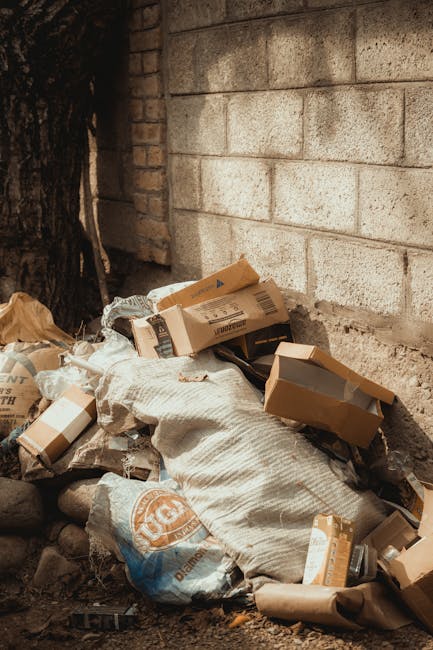
Hidden charges to avoid when hiring rubbish clearance in Wanstead

Hiring a rubbish clearance service should feel straightforward: you show them the waste, they quote a price, the rubbish disappears. Simple, right? Well, not always. The trouble starts when the headline price looks fair, then the extras creep in. If you are comparing rubbish clearance in Wanstead, the hidden charges to avoid are often the difference between a smooth job and an irritating bill that makes you wish you had asked one more question.
This guide breaks down the common surprise costs, how they show up, and how to protect yourself before anyone lifts a single bag. Whether you are clearing a flat near Wanstead High Street, sorting a garage after a long weekend of "I'll deal with it later," or planning a bigger cleanout, a bit of pricing clarity goes a long way.
Let's face it, nobody enjoys haggling over bins and bags. But a few minutes of checking the quote can save you real money and a lot of annoyance.
Why hidden charges to avoid when hiring rubbish clearance in Wanstead matters
The biggest problem with hidden charges is not just the money. It is the lack of control. A quote that seems neat on the phone can change quickly if the provider adds a call-out fee, labour surcharge, waiting time, congestion-related costs, or an extra lift-and-carry charge once they see the job in person.
In Wanstead, that matters because properties vary so much. A ground-floor house clearance is one thing; a top-floor flat with a narrow stairwell is another. A driveway collection is one thing; a rear-access job through a shared hallway is another. Pricing should reflect the real work, but it should do that up front, not after the van is already parked outside.
Hidden charges also make it harder to compare providers fairly. One company may appear cheaper, but only because it has buried the true cost in small print. Another may look higher yet include labour, loading, disposal, and travel in one clean figure. If you compare only the headline price, you can end up paying more for the "cheap" option. Bit frustrating, that.
There is also a trust issue. A clear quote is usually a sign that the business understands its own process. If pricing feels vague, the rest of the service may be vague too: arrival windows, what they will take, how they handle awkward access, and what happens if something changes on the day.
How hidden charges to avoid when hiring rubbish clearance in Wanstead works
Most rubbish clearance services price by a mix of volume, weight, item type, access difficulty, and disposal requirements. That is normal. The hidden charge problem appears when a company leaves out one of those factors until the last moment.
Here is the basic pattern to watch for:
- Initial quote: often based on a rough description or a photo.
- On-site review: the crew arrives and reassesses the waste.
- Price changes: extra charges are added for things not clearly mentioned before.
- Customer decision: you either accept the new total or waste time and still have the rubbish there.
That does not always mean the company is acting badly. Sometimes the original information was incomplete. But a proper operator should explain which details affect price and give you a realistic range. If they tell you "we'll know when we get there" without any framework, that is a red flag in plain clothes.
A good way to think about it: the quote should tell you what is included, what could increase the price, and what would count as a special category. For example, appliance disposal, mattress removal, or builders' rubble can require different handling. A provider that also offers clear pricing and quotes is usually signalling that transparency is part of their process, not an afterthought.
Key benefits and practical advantages
Keeping an eye on hidden costs is not just about avoiding overpayment. It improves the whole experience. You get better planning, fewer delays, and a more honest comparison between providers.
- Better budgeting: You know the likely final cost before the job starts.
- Less stress: No awkward price discussion when the team is already on site.
- Faster decisions: You can compare providers on real value, not just marketing.
- Fewer disputes: Clear terms reduce disagreement later.
- More suitable service: You can choose the right clearance method for the job.
There is another benefit people often miss: a transparent quote helps you prepare properly. If you know the price depends on access, weight, or item type, you can sort the waste into sensible piles and take photos that show the full job. That makes the collection smoother. Sometimes dramatically smoother.
It also supports a better customer experience when you need related services such as general waste removal or a more tailored service like house clearance. The clearer the scope, the fewer surprises.
Who this is for and when it makes sense
This advice is useful for almost anyone hiring rubbish clearance in Wanstead, but it is especially helpful if your job is more complex than a few bin bags.
- Homeowners clearing lofts, sheds, spare rooms, or post-renovation mess.
- Landlords and agents needing a fast turnaround between tenancies.
- Flat dwellers dealing with stair access, shared entrances, or limited parking.
- Tradespeople managing builders' waste, packaging, or leftover materials.
- Small businesses clearing stock, office furniture, or archived junk.
- Anyone with bulky items such as sofas, wardrobes, mattresses, or fridges.
It makes the most sense when you are trying to choose between two or three companies and the prices seem close. That is usually where hidden charges matter most. The difference between "from GBPX" and "all in" can be huge once disposal fees, labour, and access costs are factored in.
If you are working through a broader project, such as a flat clearance or a loft clearance, the risk of surprise fees is higher because the job is harder to see from a quick description alone.
Step-by-step guidance
Here is a practical way to avoid nasty surprises before you book.
- List everything you want removed. Be specific. "Old stuff" is not specific. "Two mattresses, one broken chest of drawers, six bags, and a small fridge" is far better.
- Take clear photos. Include the full pile, the access route, stairs if relevant, and any awkward corners. A couple of decent pictures can prevent a long, annoying phone call later.
- Ask what the quote includes. Labour, loading, disposal, congestion charges, VAT if applicable, call-out fees, and parking costs should all be clarified.
- Ask what could change the price. Good questions here are about extra weight, restricted access, hazardous items, and mixed waste.
- Confirm the item categories. Appliances, mattresses, sofas, and builder's debris can all affect cost and handling. If you are unsure, ask before booking.
- Request written confirmation. Email, message, or booking summary. Something you can refer to later. A quick note beats a fuzzy memory every time.
- Check whether special items need separate treatment. If you have chemicals, paint, fridges, or sharp materials, they may need special handling. For those situations, review hazardous waste disposal guidance before assuming it is all one simple job.
- Ask about the arrival window and waiting time. If a provider charges for delays after a certain period, you need to know that in advance.
A small practical tip: if the pile is spread across a property, gather it into one place before quoting. It makes the assessment clearer and can reduce the chance of "oh, we didn't realise there was more round the back."
Expert tips for better results
After enough clearance jobs, a few patterns become obvious. The people who pay less surprise money are usually the ones who ask simple, direct questions early.
Expert summary: The best protection against hidden charges is not bargaining harder on the day. It is getting a precise scope, a written price, and a clear explanation of what changes the price before the van turns up.
Here are a few tips that genuinely help:
- Use one point of contact. If three people are giving different versions of the quote, slow down.
- Be honest about access. A long carry from the road, basement steps, or no lift at all can all affect cost.
- Separate reusable from rubbish. It may not always change the price, but it can make the process more efficient.
- Ask about payment timing. Some companies want payment before removal, some after. Either can be fine if it is clearly explained. The important part is clarity, not drama.
- Check insurance and safety approach. This matters if the job involves tight spaces, heavy items, or awkward staircases. A company with a clear insurance and safety policy is generally giving you an extra layer of reassurance.
And do not be shy about sounding "too cautious." You are not being difficult. You are trying to avoid paying for misunderstandings. Very different thing.
Common mistakes to avoid
The same few mistakes keep showing up, and they are all avoidable. Some are tiny. Some are expensive.
- Only asking for a ballpark price. A broad estimate is fine to begin with, but not enough to book on its own.
- Not mentioning bulky or heavy items. A single sofa or fridge can change the pricing structure.
- Ignoring access issues. Shared entrances, parking restrictions, or lots of stairs are not minor details.
- Assuming all waste is treated the same. Builders' debris, electrical items, and general household rubbish are handled differently.
- Forgetting to ask about minimum charges. A small job can still trigger a minimum fee.
- Skipping the written quote. If the price is only spoken aloud, memory becomes a very unreliable contract.
There is also the classic mistake of comparing providers too quickly. The cheapest quote can look brilliant at 8:00 in the morning and a bit less brilliant at 3:00 when extras appear. Seen that play out more than once.
If you have mixed household items, it can help to review services such as furniture clearance or mattress and sofa disposal so you know how specific items are usually handled.
Tools, resources and recommendations
You do not need fancy tools to avoid hidden charges. You need a few simple habits and the right information in front of you.
- Your phone camera: good photos are often the fastest way to get a realistic quote.
- Notes app or checklist: keep a written list of items, access issues, and questions.
- Measurements: rough dimensions help if you are disposing of furniture, appliances, or large boxes.
- Service information pages: use company pages like pricing and quotes and payment and security to understand how the provider structures the job.
- Recycling guidance: if environmental handling matters to you, look at recycling and sustainability to see whether the business separates and recycles waste where appropriate.
A useful recommendation is to keep your request short but specific. For example: "Two wardrobes, one broken desk, five black bags, no lift, parking outside is tight." That is far better than a vague "a bit of junk from the flat."
If the job includes specialist items, check the relevant service category first. For example, building rubble and renovation waste may belong under builders waste clearance, while office decluttering may fit office clearance or business waste removal. Matching the service to the waste type often reduces confusion and cost drift.
Law, compliance, standards, or best practice
Without turning this into a legal seminar, there are a few sensible standards to keep in mind. In the UK, waste carriers should be operating legitimately, and waste must be handled responsibly. For you as the customer, the practical takeaway is simple: use a provider that can explain what happens to the waste and what types of items they can or cannot take.
Best practice usually means:
- clear pricing before work starts,
- honest description of what is included,
- appropriate handling of restricted or hazardous items,
- safe loading and removal methods,
- respect for access, neighbours, and property condition.
For items such as fridges, freezers, or other appliances, it is sensible to check dedicated guidance like fridge and appliance removal. These items often involve different handling expectations, and the price should reflect that clearly.
If you are clearing domestic space, especially after a move or refurbishment, a broader service like home clearance or garage clearance can be a better fit than treating everything as generic rubbish. That helps avoid price confusion and improves consistency.
Options, methods, or comparison table
It helps to compare the common pricing styles you are likely to see. Not every provider uses the same model, and that is exactly why hidden charges can appear.
| Pricing method | What it usually means | Hidden charge risk | Best for |
|---|---|---|---|
| Flat quote | One price for the agreed job | Low, if the scope is clear | Simple, well-described collections |
| Estimate | Approximate price based on description or photos | Medium | Jobs with some uncertainty |
| Volume-based pricing | Price depends on how much space the waste takes up | Medium to high if measurement is vague | Mixed loads and larger clearances |
| Item-based pricing | Each item type has a set price | Medium | Furniture, appliances, and bulky items |
| On-site reassessment | Final price confirmed when the team sees the waste | Highest if the process is not transparent | Jobs with very limited pre-quote information |
If you want the least stressful option, a clear written quote with defined inclusions is usually the safest route. A tidy pricing structure tends to outperform a "cheap" estimate that grows arms and legs later.
Case study or real-world example
A common local scenario goes like this. A Wanstead resident needs a late-summer clear-out after replacing a sofa, clearing out an old cupboard, and dumping a few bags from the spare room. On the phone, the price sounds fine. Then the crew arrives and notices the flat is on the second floor, the staircase is narrow, parking is tight, and one item is a heavy fridge tucked in a corner.
At that point, the price can change, and not necessarily unfairly. The issue is that the extra cost could have been identified earlier. A few photos, a clear list of items, and a mention of the stairs would probably have led to a more accurate quote from the start.
In practice, the resident could have avoided friction by breaking the job into parts: standard furniture clearance, appliance removal, and a separate note about access. That would have made the provider's job easier and the quote more dependable. Simple enough, but easy to miss when you are busy.
This is also why service-specific pages can help. If a job is mainly furniture, looking at furniture disposal makes more sense than treating it as generic waste. If it is a broader property clear-out, house clearance may give a better fit and a more accurate expectation of labour and access.
Practical checklist
Use this before you book. It is short on purpose.
- Have I listed every item that needs collecting?
- Have I shared clear photos of the waste and access route?
- Do I know whether the quote includes labour, loading, and disposal?
- Have I asked about minimum charges or call-out fees?
- Have I mentioned stairs, long carries, parking limits, or restricted access?
- Have I flagged any special items such as fridges, mattresses, or hazardous waste?
- Do I have the price in writing?
- Do I understand how payment works?
- Have I checked whether the service matches the type of clearance I need?
- Have I confirmed what happens if the job turns out bigger than expected?
If you can tick those boxes, you are in a much stronger position. Not perfect, perhaps. But strong enough to avoid most of the common pricing headaches.
Get a free quote today and see how much you can save.
Conclusion
The hidden charges to avoid when hiring rubbish clearance in Wanstead are usually the ones that were never properly explained: labour surprises, access fees, minimum charges, special-item costs, and vague reassessments on arrival. The fix is not complicated. Ask better questions, provide better detail, and insist on a quote that tells you what is included.
That way, you can choose a service based on value, not guesswork. You will also save yourself the awkward on-site conversation nobody wants on a wet Tuesday afternoon with a pile of old furniture waiting by the door.
Do the small things well, and the whole job tends to feel calmer, cleaner, and far less expensive than it might have been. And honestly, that is the sort of result worth aiming for.
Frequently Asked Questions
What are the most common hidden charges in rubbish clearance?
The most common surprise costs are call-out fees, labour charges, access or stair fees, minimum charges, parking-related costs, and extra disposal fees for bulky or special items.
How can I avoid surprise rubbish removal costs in Wanstead?
Give a full item list, send photos, ask exactly what the quote includes, confirm access details, and get the price in writing before booking.
Do rubbish clearance companies charge more for stairs or no lift?
Some do, yes. If carrying waste down several flights or through a difficult route takes more time and effort, the price may rise. Always ask before agreeing.
Is a cheap quote usually a bad sign?
Not always, but if the price is far lower than others and the inclusions are unclear, it is worth digging deeper. Cheap is only cheap if it stays that way.
Should I expect extra charges for appliances or mattresses?
Often, yes. Items like fridges, freezers, mattresses, and sofas may need different handling or disposal methods, so they can cost more than general household waste.
What should be included in a proper rubbish clearance quote?
A good quote should explain labour, loading, disposal, likely access assumptions, any minimum charge, and what might change the price if the job differs from the description.
Can I get a fixed price for rubbish clearance?
Yes, if the job is clearly described and the provider is confident about the scope. Fixed pricing is often the easiest way to avoid confusion later.
What if my rubbish load is bigger on the day than I expected?
Then the price may change, but a decent provider should explain that before starting. The best way to avoid the issue is to overdescribe the job rather than underdescribe it.
Are hazardous items treated differently?
Yes. Hazardous items usually need special handling and may not be accepted as ordinary rubbish. It is safer to flag them early and check the relevant service information first.
How do I compare two rubbish clearance companies fairly?
Compare the total price, what is included, how they handle access issues, whether the quote is written, and how clearly they explain possible extras. The cheapest headline figure is not always the best value.
Do I need to mention parking problems in Wanstead?
Yes, absolutely. Parking difficulty can affect arrival, loading, and time on site. If the van cannot stop close to the property, that may influence the final cost.
What is the safest way to book a rubbish clearance service?
The safest approach is to provide full details, confirm the scope in writing, ask about special items, and make sure you understand the pricing before anyone arrives. Clear, calm, boringly efficient - that is the goal.